The Tennessee Homeowner’s Complete Guide to Garage Door Services: Installation, Repair, Openers, Springs, and Cables

Your garage door is one of the hardest-working systems in your home. It opens and closes an average of four to six times every day, handles the full range of Tennessee’s weather — from humid summers and spring storms to occasional ice and snow — and serves as the primary entry point for most households. When it works, you don’t think about it. When it doesn’t, everything stops.
Understanding what professional garage door services cover — installation, repair, opener installation, spring replacement, and cable repair — helps Tennessee homeowners make faster, smarter decisions when something needs attention. This guide breaks down each service in depth so you know exactly what’s involved, when to call, and what to expect.
1. Garage Door Installation: A Decision That Shapes Your Home for Decades
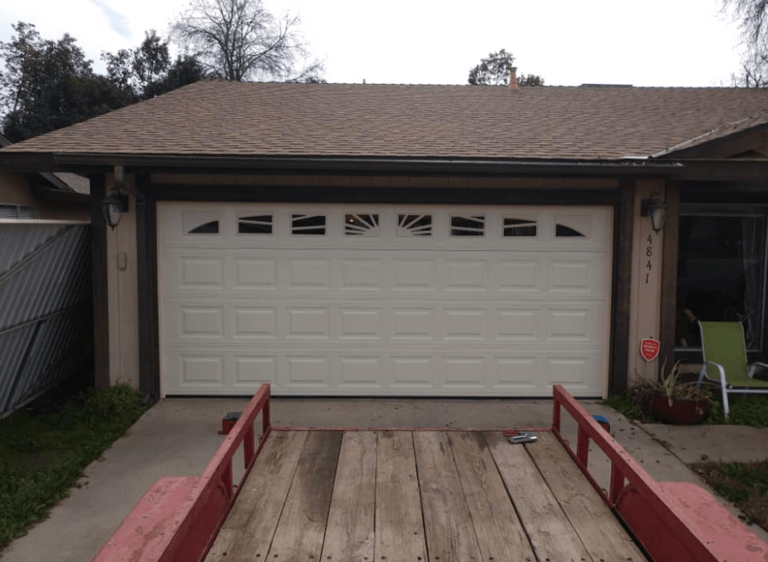
A new garage door installation is one of the most impactful home improvement investments a Tennessee homeowner can make. It consistently ranks among the highest-ROI exterior projects, frequently returning over 90% of its cost in added home value — while also delivering immediate improvements in curb appeal, energy efficiency, security, and daily convenience.
When installation is the right call:
• The door is 15+ years old and showing widespread rust, warping, or structural damage
• Repair costs are approaching or exceeding 50% of the cost of a new door
• You’re renovating and the existing door no longer suits the home’s updated style
• The door lacks insulation, modern safety features, or smart opener compatibility
• You’ve had the door repaired multiple times in the past few years
Choosing the right door for Tennessee:
• Material: Steel is the most practical choice for Tennessee homeowners — durable, low-maintenance, and available in insulated versions that handle the region’s temperature swings. Wood delivers warmth and character but demands regular sealing and painting in the state’s humid conditions. Composite offers wood aesthetics with significantly better moisture resistance.
• Insulation: Tennessee’s climate swings from hot, humid summers to cold winters with occasional ice events. For an attached garage, an insulated door (R-12 or higher) reduces heat transfer year-round, keeps stored items protected, and makes the space more comfortable as a workspace.
• Style: The garage door accounts for up to 40% of a home’s front-facing facade. Matching the door style to the home’s architecture — traditional raised panel, Craftsman carriage-house, or contemporary flush designs — creates cohesion that directly impacts curb appeal and resale value.
What professional installation includes:
Professional installation begins with accurate measurement of the opening — width, height, headroom, and side room — and hardware selection correctly sized for the door’s weight. Every component is installed to manufacturer specifications: tracks plumb and at the correct angle, springs tensioned precisely for the door’s weight, cables seated correctly on the drums, and the opener mounted, wired, and programmed. A full safety inspection — balance test, auto-reverse test, and sensor alignment — is completed before handover.
Proper spring tensioning alone — a critical step requiring technical expertise and specialized tools — is reason enough to leave installation to the professionals. A door that was never correctly installed from day one is working harder than it should on every single cycle, wearing components faster and creating recurring repair needs.
2. Garage Door Repair: Addressing Problems While They’re Still Small
Garage door repair covers the full range of issues that develop over a door’s service life — from minor hardware adjustments and weatherstripping replacement to panel work, track realignment, and roller replacement. The central principle is the same across all of it: address issues early, when they’re inexpensive and low-impact, rather than waiting for a component failure that takes the whole system down.
Common repair needs Tennessee homeowners face:
• Panel repair or replacement: Individual panels dented by vehicle impacts or storm debris can often be replaced without a full door replacement, provided the frame and hardware are structurally sound and a matching replacement panel is available for the door model.
• Track realignment: Bent or misaligned tracks cause the door to bind, jerk, or jump the rails. Track problems often develop gradually — a door that’s slightly noisier before it becomes one that won’t close. Stop operating a door with a compromised track and call for service immediately.
• Roller replacement: Steel rollers develop flat spots over time that produce grinding and uneven movement. Upgrading to nylon rollers significantly reduces operating noise and extends the replacement interval. Worn rollers left unaddressed accelerate track wear and can eventually cause a rail failure.
• Hardware tightening: Thousands of cycles vibrate every bolt and bracket gradually loose. Loose hardware creates rattling, accelerates wear on surrounding components, and eventually compromises structural integrity. An annual check and tighten is a 15-minute task with a significant payoff.
• Weatherstripping replacement: Tennessee’s humid summers and cold winters both make intact weatherstripping essential. Cracked or missing seals along the sides, top, and bottom of the door allow heat, cold, moisture, and insects into the garage. Replacement is a low-cost repair with an immediate impact on comfort and energy efficiency.
Warning signs that repair is needed:
• Grinding, scraping, or banging sounds during operation
• The door moves unevenly, hesitates, or jerks
• Visible gaps between the door and the frame when closed
• The door reverses unexpectedly before fully closing
• You can feel drafts or see daylight around the closed door
A quality repair technician doesn’t just fix the one visible component — they assess the whole system, identify what caused the failure, and flag anything else that’s approaching end of life. That whole-system perspective is what separates a lasting repair from a temporary fix.
3. Garage Door Opener Installation: Smart, Quiet, and Built for Modern Life
The garage door opener powers every automated open and close cycle — and in a household where the garage door is the primary entry point, that means hundreds of cycles every month. Choosing the right opener and having it correctly installed has a direct impact on daily convenience, home security, and the long-term health of the door system.
Opener types and their best applications:
• Belt drive: Quietest standard option. Best for garages adjacent to or below living spaces and bedrooms — the right choice for most Tennessee homes where the garage shares walls with the house. Reliable and low-vibration.
• Chain drive: Most affordable and mechanically durable. Well-suited for detached garages where noise isn’t a concern. Proven reliability over decades of heavy use in all climates.
• Direct drive: One moving part — the motor travels along a stationary chain. Exceptionally quiet and reliable with minimal maintenance needs. Premium longevity.
• Jackshaft (wall-mount): Mounts beside the door rather than overhead, freeing up ceiling space for storage or car lifts. Ideal for garages with high ceilings or specialty configurations.
Features every Tennessee homeowner should prioritize:
• Rolling code security: Generates a new encrypted access code with every remote press, making signal interception and cloning effectively impossible. A meaningful security upgrade over older fixed-code systems still found in many Tennessee homes.
• Battery backup: Tennessee’s spring storm season and occasional winter ice events regularly knock out power across the state. Battery backup ensures full door operation during and after an outage — critical when the garage is the primary entry and exit point.
• Wi-Fi and smart connectivity: Smartphone control, real-time open/close alerts, activity logs, and auto-close scheduling. Eliminates the “did I close the garage?” concern entirely and allows remote access management for family members and service providers.
• Correct horsepower: Match motor power to door weight. Heavy insulated doors require at least 1.25 hp. Undersizing the motor leads to premature wear and unreliable operation, particularly during Tennessee’s hot summers when motors run hotter.
Why professional installation matters:
An opener installed with incorrect force settings — one of the most common DIY errors — may not reverse when it contacts an obstruction, creating a safety hazard that’s particularly dangerous for children and pets. Professional installation includes precise force and limit calibration, full safety sensor alignment and testing, remote and keypad programming, and a complete system walkthrough so the homeowner understands how to operate and maintain their new opener correctly from day one.
4. Garage Door Spring Replacement: The Most Critical — and Most Misunderstood — Service
Garage door springs are the most mechanically important and most failure-prone component in the entire door system. They carry the full weight of the door on every cycle, counterbalancing it so the opener motor only needs to provide a fraction of the actual lifting force. Without functional springs, the door effectively cannot operate safely.
Understanding spring lifespan:
Standard residential torsion springs are rated for approximately 10,000 cycles — one open and one close equals one cycle. A Tennessee household using the garage door four times a day cycles through roughly 1,460 cycles per year, meaning standard springs reach their rated life in 6–7 years. A busy family home with six or more daily cycles will burn through springs in 4–5 years. High-cycle springs rated for 25,000–50,000 cycles are available and significantly extend the replacement interval for high-use applications.
Tennessee’s climate and spring wear:
Tennessee’s humidity accelerates corrosion on metal components. Springs that haven’t been regularly lubricated can corrode faster than their cycle ratings suggest. Applying white lithium grease to torsion spring coils twice a year — a simple and inexpensive maintenance task — significantly slows surface corrosion and extends spring life. The freeze-thaw cycles that affect parts of Tennessee in winter also stress springs by causing metal to expand and contract repeatedly, adding cumulative fatigue to components that are already under significant tension.
Warning signs before a spring breaks:
• The door feels significantly heavier than usual when lifted manually
• The opener strains or slows noticeably during the lift cycle
• The door doesn’t stay in place when manually lifted to the halfway position
• A visible gap in the torsion spring coils
• The door opens unevenly, one side higher than the other
When a spring breaks:
A breaking torsion spring produces a loud, sharp bang — often mistaken for a falling object or external impact. The door immediately becomes effectively inoperable. Do not attempt to force it open. Running the opener against a door with a broken spring risks stripping the opener gears, snapping the cables, and bending the tracks under the unbalanced load, turning a spring replacement into a far more expensive multi-component repair.
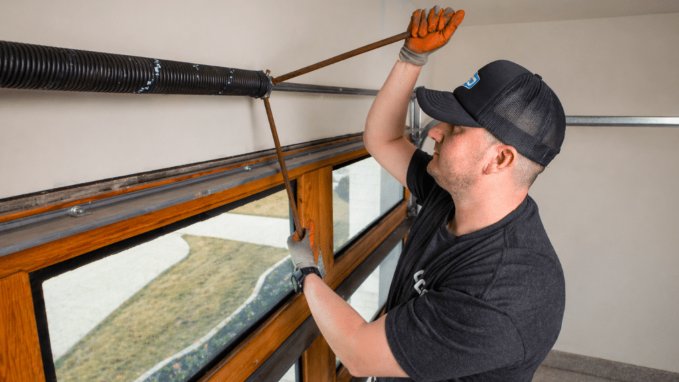
Why spring replacement is always a professional job:
A torsion spring under tension stores enough energy to cause severe injury or death if it releases uncontrollably during handling. Proper replacement requires specialized winding bars, a precise understanding of the correct turns of tension for the specific door weight, and experience recognizing when something is going wrong before it does. No online tutorial changes this risk profile. The cost of professional spring replacement is modest — the cost of getting it wrong is not.
Always replace both springs:
When one spring breaks, both should be replaced simultaneously. If one has reached the end of its service life, the other is at the same point in its cycle count and will fail within weeks or months. Replacing only the broken spring means a second service call and a second round of labor costs — a false economy that experienced homeowners consistently regret.
5. Garage Door Cable Repair: The Hidden Component That Keeps Everything Moving
Garage door cables work in close partnership with the springs — running from the bottom corners of the door through pulleys and connecting to the spring system, they transfer the spring’s stored energy into smooth, controlled door movement. Most homeowners never look at them closely enough to notice early warning signs, and by the time a cable fails, it does so without much warning.
How cables fail:
• Fraying: Individual wire strands within the cable break one by one. A frayed cable looks like a wire brush at the point of wear — each broken strand increases the load on the remaining ones. Fraying is predictable and catchable early through regular visual inspection. Catch it early and you replace a cable on your schedule. Miss it and the cable snaps without warning.
• Snap failure: A fully broken cable causes one side of the door to drop suddenly, leaving it hanging crookedly. The door cannot be safely operated in this condition — the asymmetric load immediately stresses the tracks, the opposite cable, and the spring system.
• Cable off the drum: A cable that slips off the drum it’s wound around — usually following a spring failure or accumulated slack in the system — coils loosely and can tangle in the mechanism, causing the door to bind or pulling the track inward.
• Corrosion: In Tennessee’s humid environment, individual wire strands within the cable can corrode internally over time, weakening the overall cable without any visible external fraying. The cable may appear intact but has lost significant tensile strength.
Signs your cables need immediate attention:
• Visible fraying, kinking, or rust on the cable surface
• The door hangs visibly lower on one side
• Loose or coiled cable visible at the bottom of the door or along the track
• The door jerks or moves unevenly during operation
• The door dropped suddenly or won’t close evenly on both sides
What professional cable repair includes:
Professional cable repair involves removing the damaged cable, inspecting the drums and pulleys for wear caused by the failure, installing a correctly sized replacement, re-seating it properly on the drum, and re-tensioning the system to restore correct balance. Cables are always replaced in pairs — if one has reached end of life, the other is equally worn. Like springs, cable work is not a DIY task — cables carry significant tension and are directly connected to the spring system. Improper repair risks sudden door drop or spring release.
See also: Home Communion Set Explained – Purpose, Components, and Benefits
How These Five Services Work Together
These five service areas are not independent — they’re interconnected parts of a single mechanical system. Failures cascade when problems are left unaddressed:
• A spring losing tension puts extra load on the opener motor and accelerates cable wear
• A fraying cable creates asymmetric stress on the track and spring system simultaneously
• A misaligned track from a poor installation accelerates roller, hinge, and cable drum wear
• An opener with incorrect force settings masks underlying repair needs until something breaks
A quality service call addresses the failed component and identifies its cause and downstream effects. That whole-system approach is what distinguishes a lasting repair from a temporary fix that sends you back to the same problem months later.
Quick Reference: Which Service Do You Need?
• New home, aging door, renovation, or ready for an upgrade: → Garage Door Installation
• Grinding, binding, damaged panels, loose hardware, or drafts: → Garage Door Repair
• Opener is old, noisy, unreliable, or lacks smart features and battery backup: → Garage Door Opener Installation
• Loud bang, door won’t open, door feels heavy, or springs are 6+ years old: → Garage Door Spring Replacement
• Frayed cable, door hanging unevenly, or sudden drop on one side: → Garage Door Cable Repair
Final Thoughts
A garage door system rewards consistent attention. Every one of these five service areas is cheaper, simpler, and less disruptive to address early. The worn roller that costs under $100 today becomes a derailed door that costs $400 next month. The spring showing warning signs is a $150 proactive replacement now or a $600 multi-component repair after it fails and takes the opener and cables with it.
For Tennessee homeowners, the combination of heavy daily use and the state’s demanding climate — humid summers, active storm seasons, and cold winters in the higher elevations — makes that proactive approach especially valuable. Pay attention to how your door sounds and moves, act on warning signs while they’re still small, and Reach out to Proffitt’s Garage Doors for professional inspection and maintenance before minor issues become expensive repairs. Trusting a local professional who understands the entire garage door system can help keep your door operating safely and reliably for years to come.
Whether you need a new door installation, a repair, an opener upgrade, a spring replacement, or cable service, Proffitt’s Garage Doors serves Tennessee homeowners with expert service across all five areas. Contact us today for a free estimate or to schedule a service call.
About the Author:
This post was developed with garage door service professionals to help Tennessee homeowners understand the five core service areas of a garage door system and make informed, proactive decisions about their care and maintenance.