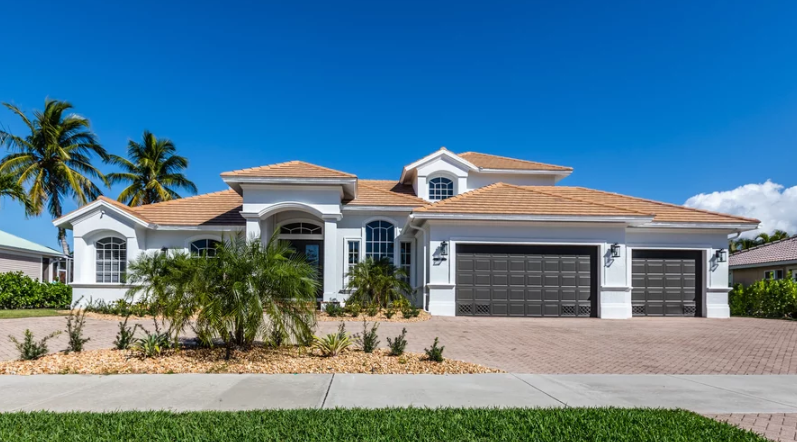
The Florida Homeowner’s Guide to Garage Doors: Hurricane Ratings, Salt Air, and Everything the Sunshine State Demands

Florida is one of the most demanding environments in the country for residential garage doors. The combination of intense heat, year-round humidity, salt air along the coasts, UV exposure that degrades materials faster than almost anywhere else in the nation, and an annual hurricane season that can bring catastrophic wind loads — all of it creates challenges that generic garage door advice simply doesn’t address.
For Florida homeowners, choosing the wrong door, the wrong material, or the wrong installation isn’t just an aesthetic or inconvenience issue — it can be a safety issue during a storm event and a costly mistake that requires replacement years ahead of schedule. This guide covers everything Florida homeowners specifically need to know to make the right decisions about their garage door systems.
1. Hurricane-Rated Garage Doors: What the Ratings Actually Mean
Your garage door is the largest opening in your home — and in a hurricane, it’s the most vulnerable. A standard residential garage door is not designed to withstand hurricane-force winds. When a garage door fails during a storm, the pressure differential that builds inside the structure can be enough to blow off the roof. The Florida Building Code now requires wind-rated garage doors for new construction in designated wind zones, but millions of existing homes still have standard doors that aren’t storm-ready.
Understanding wind load ratings:
Garage door wind ratings are expressed in pounds per square foot (PSF) of design wind pressure. The required rating for your home depends on your wind zone, determined by your location and the local building code. In South Florida and coastal areas, requirements are significantly higher than in inland regions.
• Florida Product Approval (FPA): Any garage door installed in Florida must carry Florida Product Approval — a state-level certification that the door has been tested to meet the wind load requirements for the installation’s wind zone. Never install a door without confirming its FPA number.
• Impact-rated vs. non-impact rated: Impact-rated doors are tested to withstand windborne debris — the 2×4 “canon” test at specified speeds. Non-impact rated wind-rated doors handle wind pressure but not debris penetration. In high-velocity hurricane zones (HVHZ) — Miami-Dade and Broward Counties — impact-rated doors or a combination of wind-rated door plus approved bracing is required.
• Reinforcement systems: For existing non-rated doors, horizontal bracing bar systems can be retrofitted to improve wind resistance. These are not equivalent to a purpose-built wind-rated door but provide meaningful improvement for homeowners who aren’t ready for full replacement.
How to check your current door:
Look for a sticker on the inside of the top panel listing the door’s design wind pressure rating and Florida Product Approval number. If there’s no sticker, or if the door predates current wind zone requirements for your area, consult a garage door professional about your options before the next hurricane season.
2. Salt Air Corrosion: The Accelerated Aging Problem for Coastal Homeowners
If your home is within several miles of the Atlantic or Gulf coast — which describes the majority of Florida’s population — salt air is actively corroding the metal components of your garage door system. Salt particles carried in ocean breezes are highly corrosive and attack unprotected metal surfaces far faster than non-coastal environments. A spring that might last 7 years inland can fail in 3–4 years in a coastal Florida location without proper maintenance.
What salt air affects:
• Springs: Surface corrosion on torsion springs creates stress concentration points that cause premature failure. Regular lubrication with a marine-grade or rust-inhibiting lubricant is essential.
• Cables: The individual wire strands within lift cables corrode from the outside in, weakening the cable before any external fraying becomes visible. Coastal homeowners should have cables inspected twice yearly rather than annually.
• Tracks and hardware: Galvanized steel tracks develop surface rust that accelerates roller wear. Hinges, brackets, and bolts corrode at joint interfaces where dissimilar metals contact each other.
• Steel door panels: Any area where the factory paint has chipped or scratched exposes bare steel to salt air, which begins rusting immediately. Touch-up paint should be applied promptly to any surface damage.
Coastal maintenance practices:
• Rinse all exterior metal components with fresh water monthly to remove salt accumulation
• Apply a marine-grade corrosion inhibitor to springs, cables, hinges, and track hardware every three months
• Inspect springs and cables every six months — twice the frequency recommended for non-coastal homes
• Specify stainless steel or hot-dip galvanized hardware when replacing any component
3. The Best — and Worst — Garage Door Materials for Florida
Material selection is more consequential in Florida than in most states. The heat, humidity, UV exposure, and salt air all interact with different materials in different ways, and a door that performs well in a temperate climate can deteriorate rapidly in Florida conditions.
Steel (insulated) — Best overall choice
High-quality galvanized steel with a factory-applied UV-resistant finish is the most practical all-around choice for Florida homeowners. The polyurethane foam core provides meaningful insulation against Florida’s summer heat, and the steel construction can meet wind load requirements. Key specification: look for a composite or vinyl bottom rail rather than a steel one, as the bottom rail is the most corrosion-vulnerable part of the door.
Aluminum — Excellent for coastal homes
Aluminum is naturally rust-resistant, making it well-suited for coastal Florida environments where steel corrosion is a persistent concern. Full-view aluminum and glass doors have become increasingly popular in newer Florida builds for their modern aesthetic and salt-air resistance. The tradeoff is dent resistance — aluminum dents more easily than steel — but for coastal homeowners prioritizing corrosion resistance, aluminum is a strong choice.
Fiberglass — Good coastal option with tradeoffs
Fiberglass doesn’t rust or rot, making it attractive for coastal applications. Modern fiberglass doors convincingly replicate wood grain aesthetics. The limitation is UV degradation — in Florida’s intense sun, fiberglass can become brittle and fade faster than in other climates. If choosing fiberglass, confirm the door uses UV-stabilized fiberglass and a UV-resistant finish.
Wood — Challenging in Florida
Wood garage doors are beautiful but demanding in Florida’s climate. The heat and humidity cause wood to expand and contract repeatedly, stressing paint and sealant, and the moisture infiltration that follows warps panels and encourages rot. A wood door in Florida requires annual resealing or repainting as a minimum — and even with diligent care, will require more frequent replacement than steel or aluminum. If you want the look of wood, composite or wood-look steel delivers it with far less maintenance in Florida conditions.
4. Heat, UV, and Insulation: Managing Florida’s Thermal Demands
Florida’s summers are long, intensely hot, and highly solar. A south- or west-facing garage door in Florida absorbs substantial solar radiation throughout the afternoon — turning an uninsulated garage into an oven and driving radiant heat into the adjoining living space. For an attached garage, this is a direct contribution to air conditioning costs that a well-insulated door meaningfully reduces.
Insulation recommendations for Florida:
• Attached garages: R-12 or higher. The garage shares walls with the living space — a thermally weak door is directly adding to cooling costs.
• South or west-facing doors: R-16 or higher. Maximum insulation makes the most difference on the sides of the garage that receive peak solar exposure.
• Garage workshops and living spaces: R-16 to R-18 for garages used as living or working spaces where occupant comfort matters.
UV effects on garage door components:
Beyond the thermal effect, UV radiation degrades multiple garage door components faster in Florida than in other states. Weatherstripping rubber becomes brittle and cracks significantly faster. Bottom seals harden and lose their sealing effectiveness. Paint and factory finishes fade and chalk. Plastic components — including opener motor housings, sensor brackets, and keypad covers — become brittle and crack. Specifying UV-resistant materials and finishing treatments wherever possible extends component life meaningfully in Florida conditions.
5. Garage Door Openers in Florida: What the Climate Demands
Florida’s environment places specific demands on garage door openers that homeowners upgrading from older systems — or coming from cooler climates — may not anticipate.
Battery backup is essential
Florida leads the nation in lightning strikes and has frequent power outages during summer thunderstorms and hurricane events. An opener without battery backup is completely inoperable during an outage — which in Florida means potentially being unable to open or close the garage during a storm evacuation or immediately after a storm when power restoration may take days. Battery backup is non-negotiable for Florida homeowners and should be considered a baseline requirement, not an upgrade.
Heat affects opener performance
Opener motor units in Florida garages operate in environments that can reach 120°F or higher on summer afternoons. This thermal stress accelerates circuit board degradation, shortens motor winding life, and can cause the opener’s thermal overload protection to trip, refusing to operate until it cools. Keeping the garage even moderately cooler through insulation significantly extends opener life in Florida conditions.
Surge protection for lightning country
Florida’s lightning frequency means voltage surges on the power grid are a regular occurrence. Opener logic boards are vulnerable to surge damage — a surge protector on the opener’s outlet is a $20 insurance policy against a $200+ circuit board replacement. Wi-Fi enabled smart openers also have wireless antenna components that are vulnerable to surge damage — protect them.
Smart features for seasonal residents
A significant portion of Florida homeowners are seasonal residents or divide time between Florida and another state. Smart garage door openers with Wi-Fi connectivity allow remote monitoring and control from anywhere — confirming the door is closed when you’re back in your primary residence, letting in a property manager or contractor without providing a physical key, and receiving immediate alerts if the door is opened unexpectedly. For seasonal residents, smart opener functionality is particularly valuable.
6. Pre-Hurricane Season Preparation: Your Annual Garage Door Checklist
Hurricane season runs June through November. Every Florida homeowner should complete this garage door checklist before June each year:
1. Verify wind rating: Locate the wind rating sticker on the inside top panel. Confirm the rated design wind pressure meets current requirements for your wind zone.
2. Test manual operation: Locate the emergency release cord and practice disconnecting and reconnecting the door from the opener. In an evacuation with no power, you need to be able to do this quickly.
3. Confirm battery backup: Test the battery backup by unplugging the opener and operating the door. Replace the battery if it’s more than two years old or if backup operation is sluggish.
4. Inspect all hardware: Check all tracks, hinges, rollers, and mounting brackets for corrosion, looseness, or damage. Any loose hardware reduces the door’s wind resistance.
5. Check weatherstripping: Inspect the bottom seal, side seals, and top seal for cracking, gaps, or hardening. Damaged seals allow water infiltration during storm rain events.
6. Have a professional inspection: Schedule a pre-season professional inspection to assess spring tension, cable condition, and overall system health before the stress of storm season.
See also: A Complete Guide to Performance Wear for Modern Businesses
7. Florida Garage Door Maintenance Calendar
Standard garage door maintenance schedules are written for temperate climates. Florida’s conditions require more frequent attention to specific maintenance tasks:
Monthly:
• Rinse exterior metal components with fresh water to remove salt and dust accumulation
• Test photo-eye sensors and auto-reverse function
• Visually inspect springs and cables for rust, fraying, or gaps
Every 3 months:
• Apply marine-grade corrosion inhibitor to springs, cables, hinges, and track hardware
• Check and touch up any paint chips or scratches on steel door panels
• Inspect weatherstripping for UV-related cracking or hardening
Every 6 months:
• Full lubrication with appropriate products — silicone spray on rollers and hinges, white lithium grease on springs
• Balance test and hardware tightening
• Inspect and replace bottom seal if hardened or cracked
Annually (before June):
• Professional inspection covering springs, cables, wind rating, and full safety system test
• Battery backup test and replacement if needed
• Confirm surge protection is in place on opener outlet
8. Garage Doors and Florida Homeowner’s Insurance
Florida homeowners insurance has become one of the most complex and expensive in the nation, driven largely by hurricane-related claims. Garage door upgrades can have a direct impact on your insurance premiums — a fact many homeowners don’t realize until they’ve already completed a renovation.
• Wind mitigation credits: Florida homeowners can receive significant insurance premium reductions for documented wind mitigation features, including wind-rated and impact-rated garage doors. A Wind Mitigation Inspection report — completed by a licensed inspector — documents these features to your insurer.
• Impact-rated doors and HVHZ: In high-velocity hurricane zones (Miami-Dade and Broward Counties), impact-rated doors are required by code and are expected by insurers. A non-compliant door can affect coverage.
• Documentation matters: Keep records of your garage door’s Florida Product Approval number, installation date, and any wind mitigation upgrades. This documentation supports insurance claims and wind mitigation inspections.
Final Thoughts
Florida demands more from a garage door than almost any other state — and rewards homeowners who meet those demands with a system that performs reliably through heat, humidity, salt air, and hurricane season year after year. The right door, the right material, the correct wind rating, a proper opener with battery backup, and a maintenance schedule calibrated for the Florida environment are the components of a garage door system that genuinely serves this climate.
If your current door was chosen without Florida’s specific demands in mind — or if it’s aging and showing the effects of the environment — an honest assessment from a local garage door professional is the right starting point. For expert advice, inspections, repairs, or a complete replacement, Contact Us A1A Garage Door Service and Installation to ensure your garage door is prepared for Florida’s challenging weather conditions. In Florida, getting the garage door decision right isn’t just about convenience and curb appeal. It’s about protecting your home when the next storm arrives.
Ready to make sure your garage door is built for Florida — wind-rated, corrosion-resistant, and properly maintained? A1A Garage Door Service and Installation brings local Florida expertise to every installation, repair, and service call. Contact us today for a free estimate or to schedule a pre-hurricane season inspection.
About the Author:
This post was developed with Florida garage door specialists to help homeowners throughout the Sunshine State understand the unique demands the Florida environment places on garage door systems — and how to meet them.