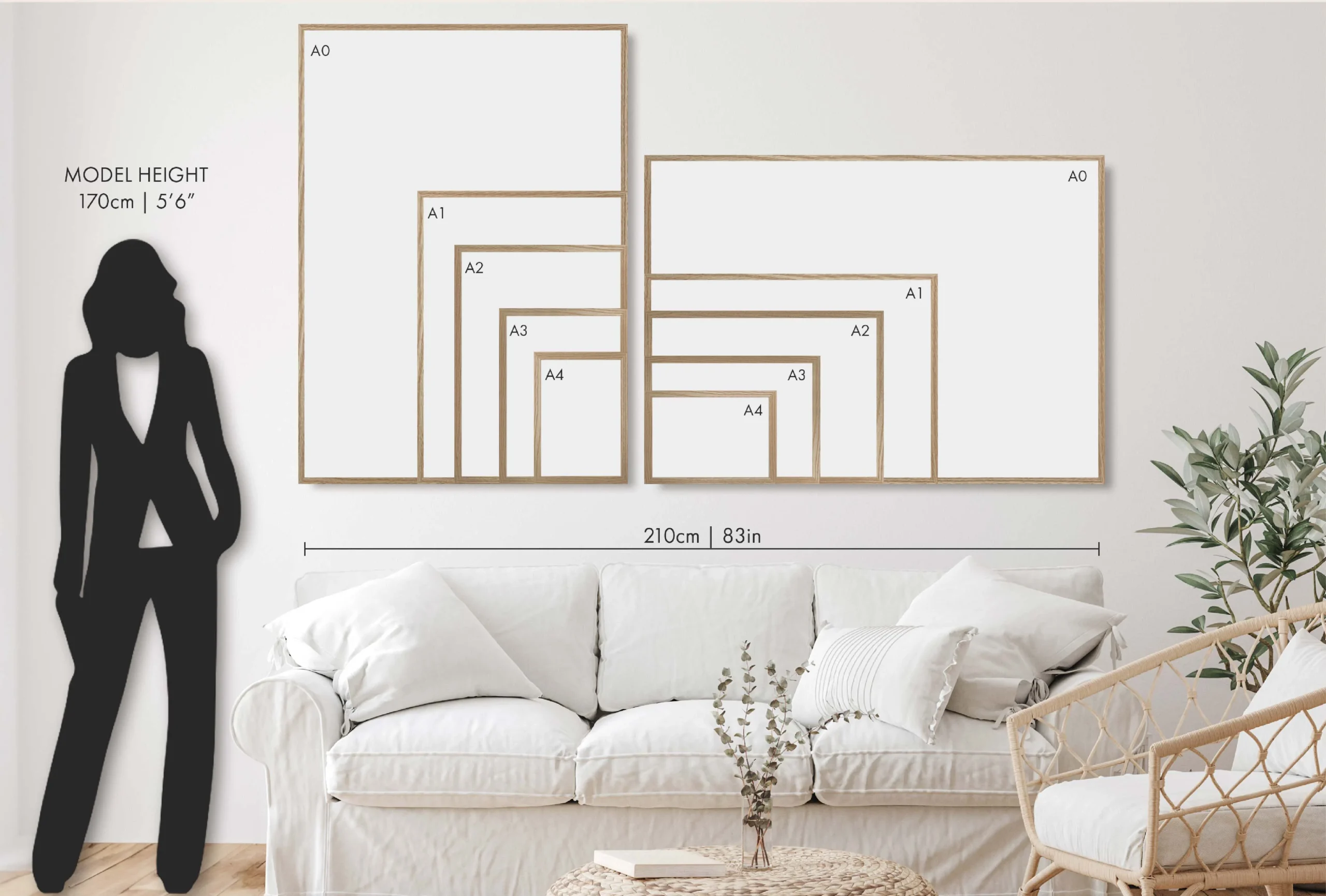
How to Choose the Right Size Wall Art: A Practical Sizing Guide for Any Wall

Wall art that is the wrong size is one of the most common decorating mistakes. A piece that is too small looks lost on a big wall, and one that is too large crowds the furniture and the room. The art itself is rarely the problem.
The good news is that sizing follows a few simple rules, and you can test them before you buy anything. This guide covers the basic proportions, how to adjust them for different walls, and how wood pieces with texture and depth change the math.
The Basic Rules for Sizing Wall Art
Most sizing advice comes down to three measurements: width, height, and the space around the piece. Get those right and the rest falls into place.
Match the Width to the Furniture
When art hangs above a sofa, bed, console, or mantel, aim for a width of about two-thirds to three-quarters of the furniture’s width. That range is large enough to look intentional and small enough to leave breathing room on each side.
Hang It at the Right Height
The usual guideline is to center the piece about 57 to 60 inches from the floor, which roughly matches average eye level. Above furniture, leave about 6 to 10 inches between the top of the furniture and the bottom of the art, so the two read as one group.
Leave Breathing Room
Art needs some blank wall around it. Leave visible wall on each side, and more on a large wall, so the piece does not look squeezed between corners, windows, or doors.
Wall Art Width Chart
Use this chart as a starting point when hanging a single piece above furniture.
| Furniture width | Suggested art width |
| 36 inches | 24 to 27 inches |
| 48 inches | 32 to 36 inches |
| 60 inches | 40 to 45 inches |
| 72 inches | 48 to 54 inches |
| 84 inches | 56 to 63 inches |
| 96 inches | 64 to 72 inches |
To calculate your own, multiply the furniture’s width by 0.66 for the low end and by 0.75 for the high end.
Adjusting for Different Walls and Rooms
The basic rules assume an average wall. A few situations call for small changes.
Large Walls and High Ceilings
On a big wall, the same two-thirds rule can still look small, so go toward the upper end of the range or choose a piece that is wider than the furniture’s proportion suggests. In a room with a ceiling taller than 8 feet, hang the piece a little higher so it stays in proportion to the wall.
Small Walls and Narrow Spaces
On a narrow wall, such as a hallway or the gap between a door and a window, choose a vertical piece or a smaller one, and measure the available wall width first. A piece should never look as if it is fighting for space with the trim.
Walls Without Furniture
If there is no furniture to size against, base the width on the wall instead. A single large piece usually looks better than several small ones, and it should leave visible wall on each side.
How Wood Wall Art Changes the Sizing
Wood pieces often have depth, texture, and open shapes, and those qualities change how large a piece looks on the wall.
Textured and Dimensional Pieces
Deep carving and layered construction add visual weight, so a textured piece can look bigger than its measurements suggest. Carved wood wall art often reads strongly even at a moderate width, so you may not need to go to the top of the range. Also check the depth, since a piece that projects several inches can interrupt a narrow hallway.
Round and Open-Center Pieces
For a round piece, measure the diameter, and treat it as a square of the same width. Open-center pieces let the wall show through, so they look lighter than a solid piece of the same size, and you can often go a little larger. Natural shapes such as natural driftwood art are irregular, so measure the widest point to know how much wall you need.
Dark and Light Wood
Dark wood carries more visual weight, while light wood looks airier. In a small room, size a dark piece conservatively so it doesn’t dominate the space, and on a large wall, a dark piece may need to be wider to hold its own.
How to Test the Size Before You Buy
You can check the proportions in a few minutes, without any tools.
- Measure the furniture and calculate the range with the chart or the 0.66 to 0.75 formula.
- Cut a paper template to the piece’s dimensions, or tape sheets of newspaper together.
- Tape it to the wall at the planned height, centered on the furniture.
- Stand back across the room and look at it from the doorway and from where you sit.
- Adjust the size, then repeat until the proportions feel right.
For a piece with depth, tape a small box or book at the same spot to judge how far it will project from the wall.
Common Sizing Mistakes
A few mistakes cause most of the sizing problems:
- Choosing a piece that is too small, which is the most common error and makes the wall look unfinished.
- Hanging it too high, so the art floats away from the furniture below.
- Ignoring depth, which matters for textured and sculptural pieces.
- Not testing the size, and relying only on measurements.
- Crowding the edges, which leaves no breathing room around the piece.
Frequently Asked Questions About Wall Art Size
What size art goes above a sofa?
About two-thirds to three-quarters of the sofa’s width, hung 6 to 10 inches above the back. For an 84 inch sofa, that is roughly 56 to 63 inches wide.
How big should art be on a large empty wall?
Larger than you expect. Aim for a wide piece or a grouped arrangement that fills a good share of the wall, and leave visible space around it.
Is it better to choose one large piece or several small ones?
A single large piece is simpler and often looks more intentional, while a group suits a wall where you want variety. Whichever you choose, treat the group as one shape when you measure.
Does the shape of the piece change the size I need?
Yes. Round and open-center pieces look lighter, so you can go slightly larger, and tall, vertical pieces suit narrow walls.
How do I know if a textured piece is too deep?
Check the depth in the listing and compare it with the space around it. In a hallway or on a stair wall, choose a lower-relief piece so it does not catch people as they pass.
Final Thoughts
Choosing the right size wall art comes down to proportion: about two-thirds to three-quarters of the furniture’s width, centered at eye level, with breathing room on each side. Wood pieces add depth and weight, so it is worth adjusting for texture and shape.
Test the size with a paper template before you buy, and you will avoid the most common mistake in wall decor.