Best Residential Garage Door Styles for Curb Appeal

Drive down any street and your eyes go straight to the garage door before they land on anything else. It is the single largest feature on most home facades, and it either pulls the whole look together or drags it down.
That is not an exaggeration. Real estate agents have said for years that a garage door update is one of the few home improvements that pays for itself almost dollar for dollar at resale. But this isn’t just about resale value. It’s about actually liking the way your house looks when you pull into the driveway after a long day.
So let’s talk about which styles are worth your attention, why they work, and how to pick one that fits your home instead of fighting against it. If you’re weighing your options, overhead garage doors remain the most practical starting point for most homeowners, since they combine flexibility with a huge range of design finishes.
Why the Garage Door Matters More Than You Think
Think about the last time you noticed a house because of a beautiful front door. Now think about the last time a garage door caught your attention. Chances are the garage door memory is more recent.
A garage door typically covers 30 to 40 percent of a home’s front elevation. When it looks tired, dented, or mismatched to the rest of the house, the whole property reads as neglected, even if everything else is in great shape.
On the flip side, a well-chosen door can make a modest ranch look custom-built or turn a plain colonial into something that looks like it belongs in a magazine spread.
Carriage House Style: Timeless and Warm
Carriage house doors mimic the swing-out barn doors used on old carriage houses, but they operate on modern tracks like any other overhead door. You get the charm without the hassle.
These doors work exceptionally well on:
- Craftsman and bungalow homes
- Farmhouse-style properties
- Traditional colonials
- Homes with stone or brick accents
The details make the difference here. Decorative hinges, handles, and window inserts arranged in a grid pattern give carriage doors their signature warmth. Wood tones or wood-look composite finishes tend to outperform flat colors in terms of buyer appeal.
One homeowner I spoke with in a nearby subdivision swapped a plain white door for a dark bronze carriage-style option and said neighbors started asking who did the work within a week. That’s the kind of visual impact this style delivers.
Modern Flush Panel Doors: Clean and Architectural
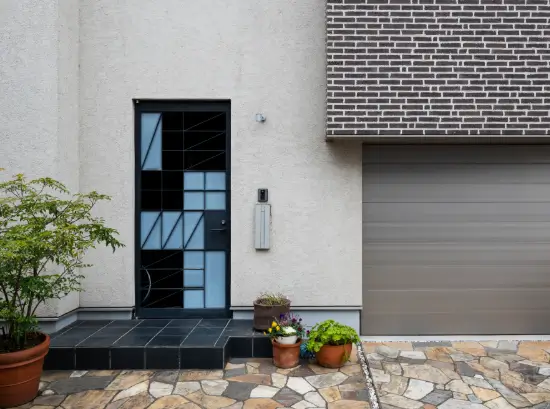
If your home leans contemporary, a flush panel door with minimal seams and a matte finish will look far more intentional than an ornate style ever could.
These doors typically feature:
- Smooth, uninterrupted panel faces
- Horizontal plank detailing
- Frosted or tinted glass strips
- Bold color choices like charcoal, black, or deep green
Have you noticed how many new-build homes now use a nearly all-black exterior with a matching garage door? That trend isn’t going anywhere soon, and it photographs beautifully for listings.
Traditional Raised Panel Doors: Reliable and Familiar
Not every home needs a design statement. Raised panel doors remain the most common residential style for a reason. They’re versatile, budget-friendly, and they suit almost any architectural period.
Short-square or long-panel raised doors work well when you want something clean without going fully modern or fully rustic. White, almond, and sandtone finishes are still the most requested colors, though homeowners are increasingly choosing richer tones like navy or forest green to stand out.
Full-View Glass and Aluminum Doors: For a Statement Look
Glass and aluminum doors show up most often on modern homes, converted lofts, and properties where indoor-outdoor flow matters. Frosted, tinted, or clear glass panels let natural light spill into the garage, which is a nice bonus if you use the space as a workshop or gym.
These doors aren’t for every budget or every climate, since insulation and privacy can be concerns. But in the right setting, nothing else creates that same sleek, almost commercial-grade appearance.
Choosing Materials: What Actually Holds Up
Style is only half the equation. Material choice determines how the door performs and ages.
Steel is the most common option. It’s durable, low-maintenance, and available in nearly every style listed above. Insulated steel doors also help with energy efficiency, particularly if your garage is attached to the house.
Wood delivers unmatched natural beauty but requires regular sealing and refinishing, especially in humid or rainy climates.
Composite and fiberglass doors mimic wood grain without the maintenance headache, making them a popular middle-ground choice.
Aluminum is lightweight and resists rust, which makes it a strong pick for coastal properties, though dents are more likely than with steel.
Matching the Door to Your Home’s Architecture
A door that looks stunning on a Pinterest board can still look wrong on your specific house. Before you commit, walk your street and take note of what other homes in your area are doing well.
A quick way to narrow things down:
- Identify your home’s dominant architectural style
- Match the garage door’s panel pattern to that style
- Choose a color that complements (not matches exactly) your trim
- Consider hardware and window inserts as the final accent
When in doubt, most reputable garage door installers can bring sample panels to your home so you can see how a style looks against your actual siding and trim before ordering.
Color Trends Worth Considering
Color choice can shift a door’s entire personality without changing its panel style at all.
- Black and charcoal continue to dominate modern and transitional homes
- Wood tones are surging again, especially on farmhouse and craftsman builds
- Deep greens and navy blues add character without feeling trendy in a way that dates quickly
- Classic white still works, particularly on homes with strong architectural detailing that doesn’t need extra color competing for attention
Practical Tips Before You Buy
A few things worth checking before you sign off on any garage door project:
- Measure twice. Garage door openings are rarely perfectly square, and professional measurement avoids costly surprises.
- Ask about insulation ratings if your garage shares a wall with living space.
- Compare warranty terms between manufacturers, since coverage on hardware and finish can vary widely.
- Request references or recent project photos from any installer you’re considering.
A Quick Word on Budget
Garage door costs vary widely based on material, size, and insulation level. Basic steel raised-panel doors sit at the lower end of the price range, while custom wood or full-view glass doors can run several times higher.
That said, mid-range insulated steel doors with a carriage-style overlay often deliver the best balance of appearance and value for most homeowners.
Final Thoughts
Your garage door isn’t just a functional necessity tucked into your home’s design. It’s a first impression that repeats every single day, for you and for everyone who drives past.
Take the time to match style, material, and color to your home’s architecture rather than chasing whatever looks good in a showroom. The right choice will still feel right five or ten years from now, which is more than you can say for most home upgrades.
If you’re ready to move forward, start by narrowing down two or three styles that genuinely fit your home’s character, then get quotes so you can compare real numbers against real designs.