Why Phoenix Homeowners Get Less Cooling From Ceiling Fans Than They Expect and How Wiring Is Often the Reason

Your ceiling fan is spinning, but your home still feels stuffy. Poor wiring, a worn capacitor, or an undersized circuit can quietly rob a fan of its cooling power before a single blade turns.
Penguin Air, Plumbing & Electrical, a Phoenix-based electrical and HVAC company founded in 2011, has helped homeowners across the metro area track down hidden wiring issues. Below is the same diagnostic framework their electricians use in the field.
Why Does Your Ceiling Fan Feel Like It’s Not Doing Anything?
A ceiling fan that moves little air is usually suffering from wrong direction settings, an undersized motor, or a wiring problem reducing power to the motor, a documented pattern in homes with high ceilings or open floor plans common in Chandler, Gilbert, and Scottsdale.
Two Categories of Problems
Ceiling fan problems fall into two buckets. The first covers mechanical and settings issues: wrong blade pitch, summer versus winter direction, or a fan too small for the room. The second is electrical: wiring faults, weak connections, incorrect circuit loads, and improper installation can all reduce power to the motor, meaning slower blades and less airflow.
The Category Most Homeowners Miss
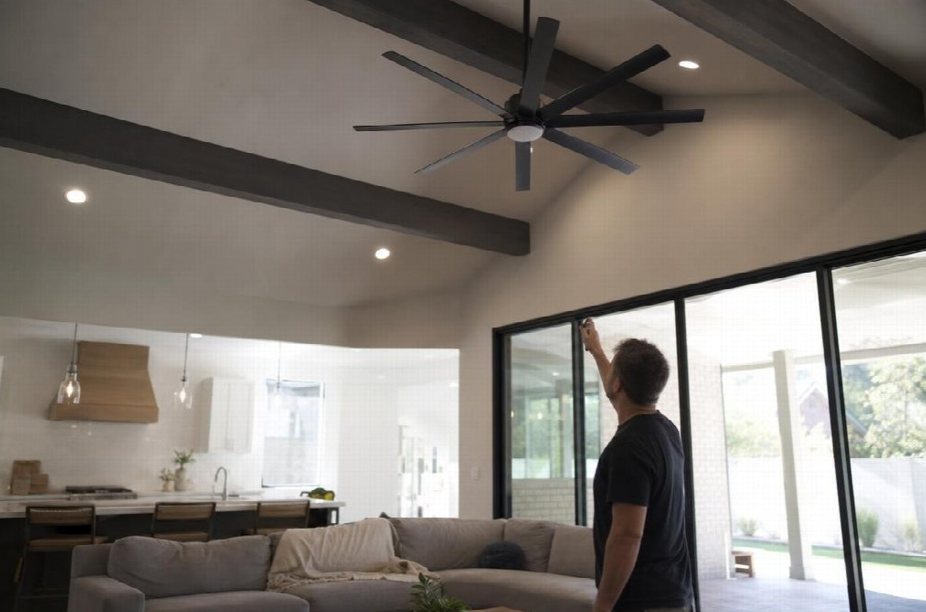
The electrical side is easy to overlook because the fan still turns on. A fan running on a compromised circuit is not running at full capacity, and during peak heat season that gap affects both comfort and utility bills.
The Capacitor: The Overlooked Culprit in Extreme Heat
Nearly every ceiling fan uses a small capacitor to control speed and provide starting torque. When it weakens, the fan may only reach one speed, hum without turning, or start slowly. Heat dries out the electrolytic material inside capacitors faster than manufacturer ratings suggest, especially near attics or vaulted ceilings. If a fan works on high but not low, or takes several seconds to start, a degraded capacitor is the leading suspect.
The Settings Mistakes Homeowners Make First
Before blaming the fan itself, check how it is set up. Most ceiling fan cooling problems come down to three simple mistakes.
Fan Direction: Summer vs. Winter Mode
For summer cooling, blades must spin counterclockwise when viewed from below, pushing air straight down and creating a wind-chill effect. Clockwise rotation pulls air upward, the winter setting, and does nothing to cool occupants. Running a fan in the wrong direction from May through October means six months of wasted electricity.
Speed Settings and Room Size Mismatch
A 42-inch fan is undersized for any room larger than 225 square feet. Open great rooms in Laveen, Goodyear, and Buckeye often exceed 400 square feet and need a 52-inch fan or larger. Vaulted ceilings, standard in many local homes built after 2000, reduce effective airflow at low speeds, requiring a higher setting to compensate.
Running the Fan in an Empty Room
A ceiling fan cools people, not rooms. The wind-chill effect works through evaporative cooling on skin, so a fan in an empty room draws electricity with zero comfort benefit. SRP customers on time-of-use plans face steep on-peak rates on summer weekday afternoons, making this an especially costly habit.
When to Replace the Wiring vs. When to Replace the Fan
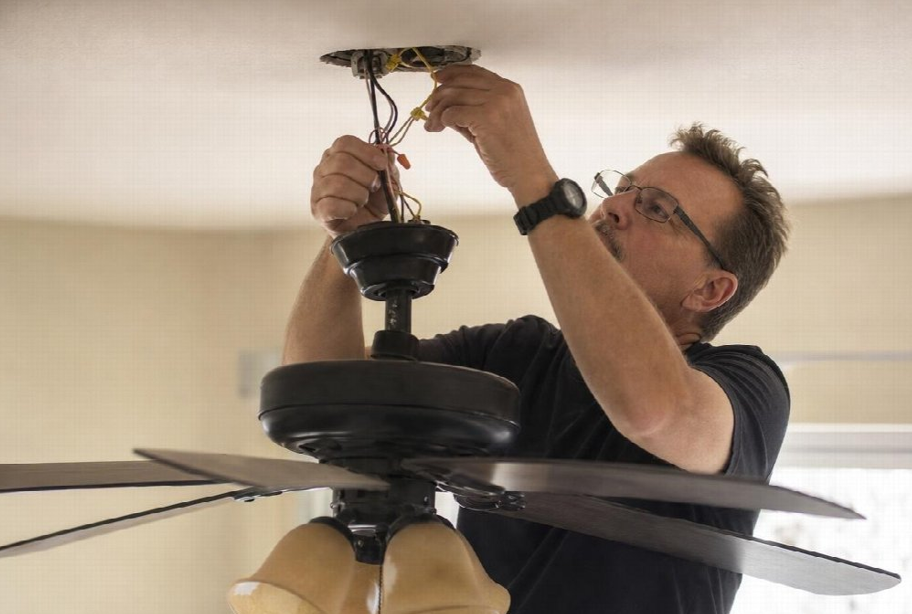
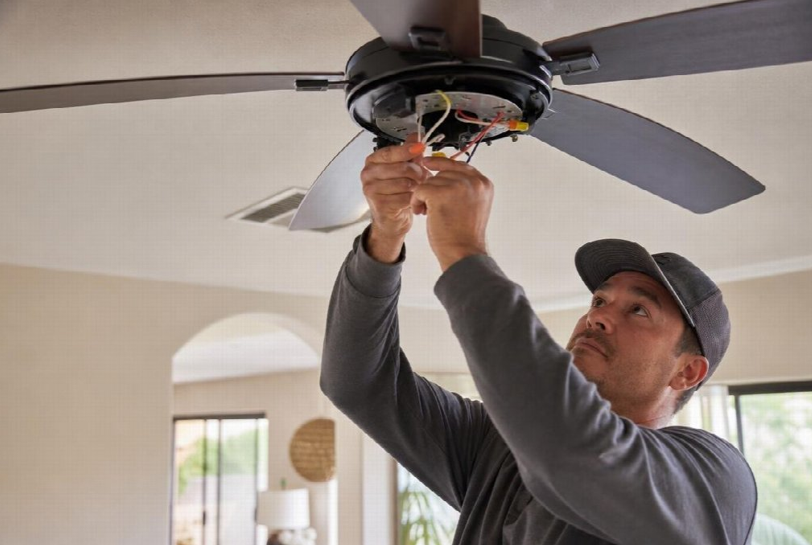
Wiring faults are often misread as motor failures, and homeowners end up buying a new fan that runs just as poorly on the same bad wiring. Inspecting the junction box is the only way to know for certain.
Fans Under 10 Years Old
A fan less than 10 years old showing weak airflow or speed inconsistency is almost never a motor problem. Issues in this age range typically trace to a dimmer switch used where a fan-rated switch is required, a loose wire at the canopy, or an undersized circuit. Fixing the wiring is the right call.
Fans 15 Years or Older
A fan 15 or more years old that hums or runs at inconsistent speeds, after wiring checks out clean, likely has a failing motor or capacitor. At that age, repair costs often approach the price of a new unit, making replacement more practical.
Older Homes in Sunnyslope, Alhambra, and West Phoenix
Pre-1990 construction in these neighborhoods may contain aluminum branch wiring or heat-damaged insulation. Aluminum expands and contracts more than copper, loosening connections over time and creating fire risk. An electrician familiar with older local construction will recommend copper pigtails or approved connectors and confirm the ceiling box is fan-rated before installation. Ceiling fan installation from Penguin Air, Plumbing & Electrical handles both the wiring assessment and the fixture install in one visit.
How Valley Heat Changes the Math
Attic-adjacent spaces regularly exceed 150 degrees in summer, accelerating wear on motors and wiring insulation. A fan rated for 20 years in a moderate climate may show wear in 10 to 12 years locally. The repair-or-replace answer depends entirely on what a wiring inspection finds, not on the fan’s age alone.
See also: Home Communion Set Explained – Purpose, Components, and Benefits
Frequently Asked Questions
Can a Ceiling Fan Actually Make a Room Feel Cooler Without Air Conditioning?
A ceiling fan cools people, not rooms, by creating a wind-chill effect that makes skin feel several degrees cooler. In Phoenix summers, where temperatures regularly exceed 110 degrees, a fan alone cannot compensate for the heat load in a poorly insulated or unshaded room. Pairing ceiling fans with AC reduces the cooling load and lowers energy bills.
How Much Does It Cost to Repair a Ceiling Fan Versus Replacing It?
A capacitor swap or switch replacement typically costs $75 to $150 for parts and labor. A full replacement, including wiring work and new hardware, can run $150 to $400 or more depending on the fixture and ceiling height. If the fan is under 10 years old and the motor is not burned out, repair is generally the more economical choice.
Is It Safe to Leave a Ceiling Fan Running All Day in a Phoenix Home?
Modern ceiling fans are designed for continuous operation. However, Phoenix heat accelerates wear on motors and capacitors, so a fan running constantly in an uncooled garage or enclosed patio may overheat faster than one in an air-conditioned space. Unusual humming, wobbling, or burning smells warrant inspection.
Why Does My New Ceiling Fan Still Wobble After Installation?
Wobbling in a newly installed fan almost always comes from blade imbalance, loose blade brackets, or an improperly secured mounting bracket. If tightening all screws and using the included balancing kit does not resolve it, the junction box may not be rated for ceiling fan loads, something a licensed electrician can assess.
Can I Install a Smart Ceiling Fan on Older Wiring in My Phoenix Home?
Smart ceiling fans typically require a neutral wire at the switch location, which many older Phoenix homes built before the 1980s lack. Without one, the fan may flicker, behave erratically, or fail to connect to an app. A licensed electrician can run the appropriate wiring or recommend a compatible smart switch for the existing setup.
How Often Should Ceiling Fans Be Serviced or Inspected?
Most ceiling fans benefit from a quick inspection every one to two years, covering blade condition, motor housing, mounting hardware, and capacitor health. In the Phoenix area, heat, dust, and high usage hours mean components wear faster than the national average. An inspection is warranted any time a fan makes new noises, loses speed gradually, or operates inconsistently.
Does Ceiling Fan Size Actually Matter for Cooling Efficiency?
Yes, blade span directly impacts airflow volume in cubic feet per minute. A 42-inch fan in a 400-square-foot open-plan room will move too little air to create a noticeable wind-chill effect. The general guideline is a 52-inch or larger span for rooms over 225 square feet, with a second fan added in long or irregularly shaped rooms.
About Penguin Air, Plumbing & Electrical
Penguin Air, Plumbing & Electrical is a Phoenix-based home services company founded in 2011, serving Phoenix, Scottsdale, Chandler, Gilbert, and surrounding cities with HVAC, plumbing, and electrical services. The company holds a BBB A+ Rating, has maintained BBB Accreditation since 2011, and was recognized with a Business Ethics Award. The office is located at 3710 East University Dr Suite 1, Phoenix, AZ 85034.
Business Name: Penguin Air, Plumbing & Electrical
Address: 3710 E University Dr # 1, Phoenix, AZ 85034
Phone Number: (480) 525-5400