How to Reduce Your Carbon Footprint at Home

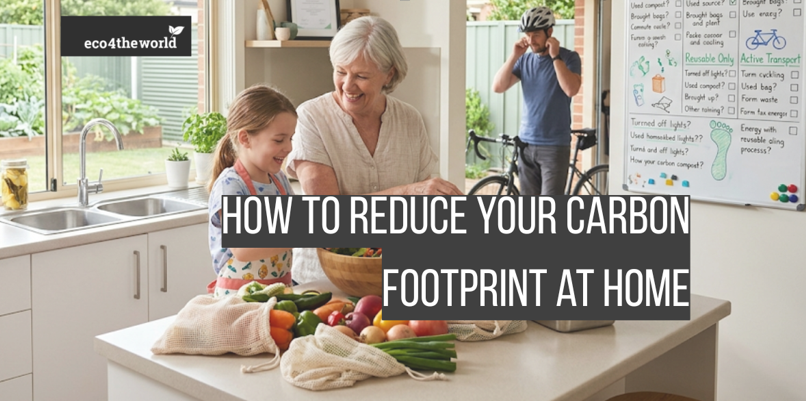
You can reduce your carbon footprint at home by adopting energy-efficient habits, cutting food waste, ditching disposables, and rethinking your transport choices. These changes don’t require a complete lifestyle change or huge upfront costs. Just a few small shifts in daily routines can drop emissions while keeping more money in your pocket.
According to Our World in Data’s report, Australian households produce roughly 14-15 tonnes (per person) of carbon footprint yearly through energy use, transport, and waste. To help reduce this impact,resources like Eco 4 The World offer practical steps without the guesswork.
This guide covers the habits worth adopting right now. You’ll learn which energy swaps cut bills quickest, how food choices affect emissions, and why reusables beat disposables every time.
Let’s get into it.
Energy Efficiency: Where Most Households Waste Energy
Australian households waste energy in the same ways: heating and cooling, old appliances, and devices left on standby. However, improving energy efficiency doesn’t mean buying all new gear tomorrow. Most wins come from tweaking what you already own.
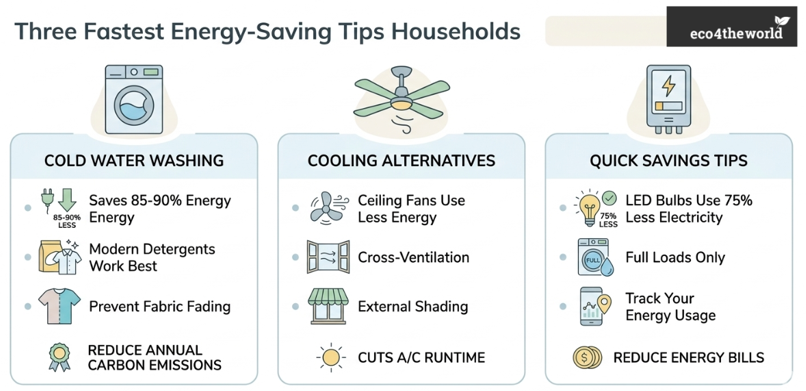
The following three areas drop your energy usage fastest:
Why Cold Water Washing Beats Hot Every Time
Hot water heating accounts for most of the energy used in a washing cycle. This makes cold washing drastically cheaper. Besides, modern detergents work just as well in cold water, removing stains and dirt without needing high temperatures.
Switching to cold washes saves around 123 kilograms of carbon emissions annually for an average Australian household. Plus, washing clothes in cold water helps prevent fabric fading. You save money on energy bills and replace clothing less often while using less energy overall.
Air Conditioning Alternatives for Australian Homes
Generally, ceiling fans use less energy than air conditioning while creating effective cooling through air circulation. Besides, cross-ventilation with strategically opened windows naturally lowers indoor temperatures by 5-8 degrees in the evening and morning.
Beyond these, external shading, including awnings or shade cloth, blocks heat before it enters your home. In practice, combining ceiling fans with outdoor shading can cut air conditioning runtime mostly during peak summer. This slashes electricity use without making your home unbearable during hot months.
Useful Tip: For long-term energy-efficiency gains, consider installing solar panels to offset cooling costs, or install them with rebates available through state programs.
Energy Tips That Lower Your Bills Quickly
Based on our observation, LED bulbs use 75% less electricity than traditional bulbs and last up to 25 times longer in daily use. Energy-efficient appliances, like newer fridges and washing machines, also significantly reduce consumption compared to models over ten years old.
For your information, running dishwashers and washing machines only with full loads cuts water and energy consumption nearly in half. These energy tips seem minor individually, but stacking them creates serious savings.
Want more energy tips? Well, track down which of your rooms uses the most electricity, then target those areas first to reduce energy waste. One Queensland household tracked their energy usage for three months after making these swaps. Their energy bill dropped by $180 per quarter.
Food Waste and Your Carbon Footprint
Most Australians don’t realise they are fuelling climate change by wasting food. Food waste produces methane in landfills, which is a greenhouse gas 25 times more potent than carbon dioxide (CO2) over 100 years. According to End Food Waste Australia, food waste generates 17.5 million tonnes of CO2 emissions yearly, representing 3% of Australia’s national greenhouse gas emissions.
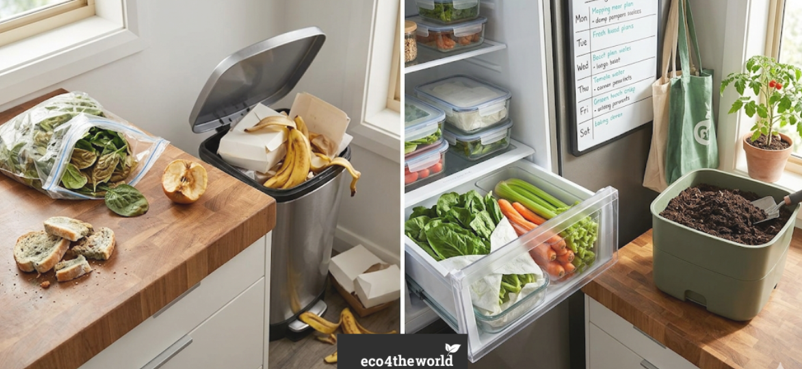
If you’ve ever thrown out a bag of spinach turned to slime, you know the guilt (and the frustration of wasting money you worked hard for).
Here’s how to cut food waste fast and reduce your guilt:
Compost Food Scraps at Home
With composting, you can divert organic matter from landfills while creating nutrient-rich soil for gardens and pot plants. Home composting systems cost little but handle vegetable peels, coffee grounds, and eggshells. With this small tweak, you can easily reduce your carbon footprint, save money on garden fertiliser, and lower greenhouse gas emissions from decomposing food scraps.
Eat Less Meat Twice Weekly
You can try eating less meat, which significantly reduces greenhouse gas emissions, since meat and dairy production account for a large number of global emissions. Besides, plant-based foods require less water and land than beef or lamb production. So, swapping two dinners a week for lentils, beans, or tofu cuts your carbon footprint without going fully vegetarian.
Plan Meals Before Shopping
Trust us, planning meals cuts food waste by nearly half! So, buy only what you need based on a weekly meal plan. This prevents overbuying and reduces the average household’s food waste spend by helping you save money while cutting emissions from wasted food.
Store Vegetables Properly
Store your vegetables in crisper drawers and airtight containers to keep them fresher for longer and prevent them from hitting the bin. For instance, leafy greens last five days longer when wrapped in damp paper towels. Carrots, celery, and broccoli stay crisp for weeks in sealed containers with minimal water at the bottom.
After sorting your food habits, the next waste culprit sits right in your kitchen bin.
See also: How to Stop Polycarbonate Sheets from Turning Yellow
Can Ditching Disposables Really Help Climate Change?
Yes, ditching disposables cuts manufacturing emissions, landfill waste, and the carbon footprint of constant replacement production.
Frankly, most people underestimate how many takeaway cups they use in a year. Disposable cups alone generate 1.5 billion pieces of waste each year in Australia, with most ending up in landfills, according to waste management data.
Manufacturing single-use plastics typically generates significant carbon emissions during extraction, production, and transport. Plus, waste from disposable items like plastic bottles, straws, and disposable razors fills landfills and contributes to global plastic consumption. That’s how every plastic bottle produced requires fossil fuels and releases greenhouse gas emissions throughout its lifecycle.
Sometimes, reusable alternatives like a reusable bottle, coffee cups, and reusable bags eliminate the need for repeated manufacturing emissions and help you save money over time. Even disposable razors, paper towels, and toilet paper create less waste when you choose products made from recycled materials or switch to washable cloth alternatives.
Bottom line: Consider giving disposable items a second life through upcycling before tossing them. As a result, you will reduce your carbon footprint and lower your environmental impact simultaneously while producing less waste overall.
Right, so you’ve cut waste at home. What about the emissions from getting around?
Transport Choices That Actually Reduce Carbon Footprint
When you change transport habits, you’ll cut emissions, save money, and improve your health simultaneously. Transportation accounts for a vast amount of Australia’s greenhouse gas emissions, with personal vehicles responsible for most of it.
Besides, burning fossil fuels in cars releases carbon emissions that drive climate change while draining your wallet.
Now let’s have a look at the two options to reduce your carbon footprint fastest:
Electric Vehicle Options Worth Considering
Electric vehicles produce zero tailpipe emissions and cost less to run per kilometre than petrol-powered vehicles. That’s why Australia’s growing EV charging network and government rebates make switching more accessible and affordable for everyday households now.
Even when charged using grid electricity, EVs produce fewer lifetime emissions than petrol cars due to improved energy efficiency. Zero-emission vehicles powered by renewable energy sources like solar panels further reduce your carbon footprint.
Verdict: If walking or cycling isn’t realistic for your commute, electric options are worth a proper look.
Walking, Cycling, and Public Transit Benefits
According to our calculations, replacing one car trip weekly with walking or cycling saves approximately 500 kilograms of carbon emissions each year. Meanwhile, public transport produces 45% fewer emissions per passenger kilometre than single-occupancy vehicles across Australian cities and regional areas.
Active transport often improves physical health, reduces fuel costs, and decreases urban air pollution, but it harms respiratory health in the long term. So, public transportation and public transit networks continue to expand, making car-free commutes more practical.
These simple transport swaps help you reduce emissions and lower your environmental impact.
Your Next Steps Start Right Now
You can reduce your carbon footprint starting today without rushing your entire life. Energy efficiency improvements, food waste reduction, ditching disposables, and wiser transport choices all stack up fast. And each habit cuts your carbon footprint while helping you save money throughout the year.
Small changes create lasting environmental impact when enough households commit. Sustainable practices like composting food scraps, switching to cold water washing, choosing reusable bags, and walking short distances all add up. They’re practical swaps that benefit your wallet and help protect nature simultaneously.
Ready to reduce your carbon footprint right now? Start with one habit this week:
- Switch your laundry to cold water
- Plan next week’s meals to cut waste
- Grab reusable bags for your next shopping trip
- Walk instead of driving for trips under 2 kilometres
Visit Eco 4 The World for more practical sustainability tips customised to Australian households.