Installing Hardwood in a Climate With Real Seasons: What Homeowners Should Know

Few things add warmth and value to a home like real hardwood floors. But in places with cold, dry winters and humid summers, like much of New England, wood moves. It expands when it absorbs moisture and shrinks when it dries out. Understanding that movement is the key to a hardwood floor that looks great for decades instead of cupping, gapping or squeaking within a few years.
Why wood moves
Wood is hygroscopic: it absorbs and releases moisture to match the air around it. In winter, when the heat is running and indoor humidity drops, boards shrink and small gaps can appear between them. In summer, humidity rises and boards swell, closing those gaps. A well-installed floor handles this. A poorly installed one can cup (edges higher than the center) or crown (center higher than the edges).
Solid vs. engineered hardwood
Solid hardwood is one piece of wood all the way through. It can be sanded and refinished many times, but it reacts more to humidity changes and generally shouldn’t go below grade, such as in basements.
Engineered hardwood has a real wood top layer bonded to a plywood or composite base. The cross-layered construction makes it far more stable, so it handles humidity swings better and can go in more places, including some basements. Its downside is that it can be refinished fewer times, depending on the thickness of the wear layer.
Acclimation: don’t skip it
Hardwood should acclimate in your home before installation, often for several days, so its moisture content matches the room. A good installer checks the moisture of both the wood and the subfloor with a meter before starting. This step prevents most seasonal problems.
Subfloor and expansion gaps
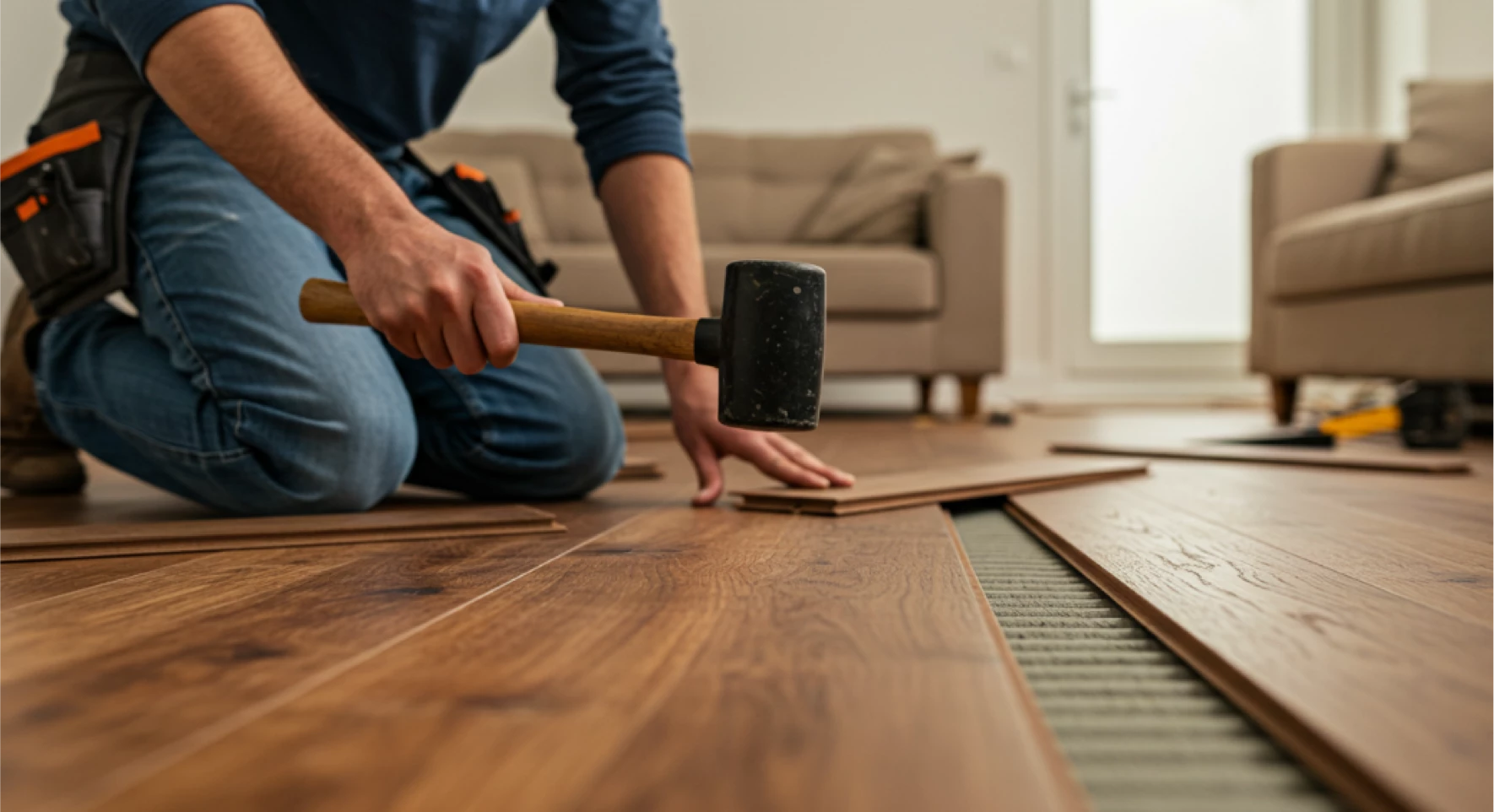
A flat, dry and solid subfloor is essential. Installers also leave a small expansion gap around the edges of the room, hidden under baseboards, so the floor has room to move. Skipping this gap is one of the most common causes of buckling.
Keep humidity steady
After installation, aim to keep your home’s indoor humidity in a moderate range year-round. A humidifier in winter and a dehumidifier or air conditioning in summer will protect your investment.
Hiring the right installer
Hardwood is less forgiving than click-lock floors, so experience matters. For homeowners in southern New Hampshire, professional hardwood floor installation in Nashua, NH includes moisture testing, subfloor prep and finishing.
Where hardwood isn’t the best choice
Hardwood isn’t ideal everywhere. In bathrooms, mudrooms and laundry rooms, water exposure makes it risky. Many homeowners pair hardwood in living spaces with a more water-friendly option elsewhere. Laminate floor installation is a popular budget-friendly alternative for rental units or busy family rooms, and modern water-resistant laminates look surprisingly close to real wood. For bedrooms where comfort matters most, some families choose soft, warm carpet installation instead.
The payoff
Done right, hardwood floors can last for generations and be refinished to look new again. Respect the wood’s need to move, control your indoor climate and hire someone who knows the local conditions, and you’ll enjoy that warmth for decades.