Pump for Small Fountain: A Beginner’s Buying Guide

Choosing the wrong pump for small fountains can cost you more than money. You might end up with weak water flow that barely trickles. Or worse, a pump that burns out in months because it’s working too hard for your setup.
Most people make this mistake. They grab whatever’s on sale or trust a product description that sounds good. Then they’re stuck with a fountain that disappoints or a pump replacement bill they didn’t expect.
Let’s break down what you actually need to know.
Understanding GPH and Why It Matters
GPH stands for gallons per hour. This number tells you how much water your pump can move. When choosing a pump for small fountain setups, you typically need between 50 and 200 GPH.
Here’s the thing, though. A higher GPH doesn’t always mean better. If your fountain is just two feet tall with a simple spray pattern, 150 GPH might create a splash zone instead of a peaceful water feature.
Think about your fountain’s height first. Measure from the water surface to where you want the spray to reach. Add a few inches as a buffer. Now you know your target.
Smaller tabletop fountains work fine with 50-100 GPH. Garden fountains with multiple tiers might need 150-200 GPH. Go too low, and you get a sad dribble. Go too high, and you’re wasting electricity while water splashes everywhere.
Head Height Can Make or Break Your Setup
Head height is the vertical distance your pump needs to push water. Many beginners ignore this spec completely. Then they wonder why their fountain barely works.
A pump rated for 100 GPH at zero head height might only deliver 60 GPH when lifting water three feet up. The pump has to work against gravity. That takes power.
Check the pump’s performance chart if available. Look for the GPH rating at your specific head height. If you can’t find this information, pick a pump rated 30-40% higher than your calculated GPH need.
This gives you wiggle room. You can always dial down the flow with a valve. You can’t magically create more power from an undersized pump.
Submersible vs External: What Works for Small Fountains
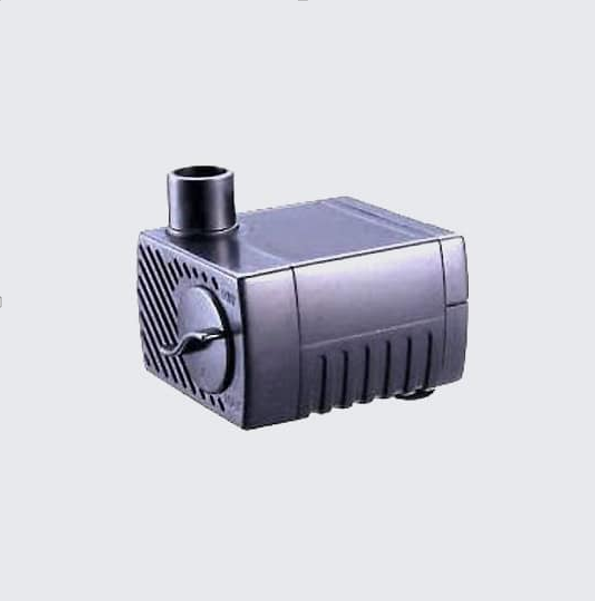
Most small fountains use submersible pumps. They sit underwater, out of sight. They’re quieter because water muffles the motor sound. Installation is straightforward, too.
External pumps sit outside the fountain. You need plumbing to connect them. They’re louder. They take up space. For a small fountain, they’re usually overkill.
Stick with a submersible unless you have a specific reason not to. They’re designed for this exact job. Less hassle, fewer parts, easier to hide.
One exception exists, though. If your fountain freezes in winter, an external pump gives you easier access for winterizing. You can drain and disconnect without fishing around in cold water.
Energy Costs Add Up Faster Than You Think
That cheap pump might seem like a bargain. Run it 24/7 for a year and see what happens to your electric bill. A 25-watt difference doesn’t sound like much. Over twelve months, that’s real money.
Look for pumps with energy ratings. Compare wattage against GPH. You want maximum water movement for minimum power draw.
Some pumps include adjustable flow controls. You can reduce power consumption during off-peak hours or when you don’t need full spray height. This feature pays for itself over time.
Solar-powered pumps exist for small fountains. They work during daylight hours. No electricity costs at all. The tradeoff is that performance drops on cloudy days, and you get zero flow at night.
Durability Matters More Than Price
Pumps fail. It’s just a question of when. Cheap pumps fail faster. You’ll replace them within a year, maybe two if you’re lucky.
Quality pumps use better materials. Ceramic or stainless steel shafts instead of plastic. Sealed motors that resist corrosion. These details extend pump life from months to years.
Check what warranty comes with the pump. A 30-day warranty screams disposable junk. One or two years suggests the manufacturer has some confidence in their product.
Read reviews from people who’ve actually run the pump for six months or more. Fresh-out-of-the-box performance means nothing if the pump dies after one season.
See also: How Businesses in Hong Kong Use WhatsApp Page and Telegram Chinese
Final Considerations Before You Buy
Noise level varies between pumps. If your fountain sits near a bedroom window, quiet operation matters. Look for magnetic drive pumps. They run smoother and quieter than standard motors.
Cord length is easy to overlook until you’re standing there with a pump that won’t reach your outlet. Measure the distance. Add extra length for routing around obstacles. You might need an outdoor-rated extension cord.
Adjustable flow gives you control after installation. You can fine-tune the spray pattern without buying a different pump. This flexibility helps if you’re not completely sure about your GPH needs.
Temperature ratings matter if you live somewhere with hot summers or cold winters. Not all pumps handle temperature extremes well. Check the specs against your local climate.
Choosing the right pump for your small fountain takes maybe thirty minutes of research. Get it wrong, and you’ll spend hours troubleshooting or replacing parts. Get it right, and you’ll have years of reliable operation with minimal fuss.