Building a Brushing Routine Kids Will Actually Follow

Every parent knows the nightly negotiation: the toothbrush is too scratchy, the toothpaste is too spicy, or the child is simply too tired. Yet the habits children form in their early years tend to stick, and good brushing is one of the most effective ways to prevent cavities. The trick is turning brushing from a battle into a routine that feels normal.
Start earlier than you think
Oral care begins before the first tooth appears. Wiping an infant’s gums with a soft, damp cloth after feedings gets babies used to having something in their mouth. Once the first tooth erupts, a small soft-bristled brush and a smear of fluoride toothpaste about the size of a grain of rice is the standard recommendation for children under three. From age three to six, a pea-sized amount is appropriate.
Use the right tools
A brush with a small head and soft bristles reaches the back teeth more easily and feels gentler. Many kids respond well to brushes with favorite colors or characters, and letting them choose gives a sense of ownership. Electric toothbrushes designed for children can be helpful too, since many have built-in two-minute timers and pulse every 30 seconds to signal a move to a new section of the mouth.
Toothpaste flavor matters more than adults realize. Mint can feel intense for young kids, so a milder fruit or bubblegum flavor with fluoride may reduce resistance.
Make two minutes feel shorter
Two minutes is the recommended brushing time, and it can feel endless to a five-year-old. Music helps: a two-minute song played every night becomes a cue. Sand timers and brushing apps work similarly. Some families divide the mouth into four zones and count together, or have the child “find the sugar bugs” in each zone.
Brush together
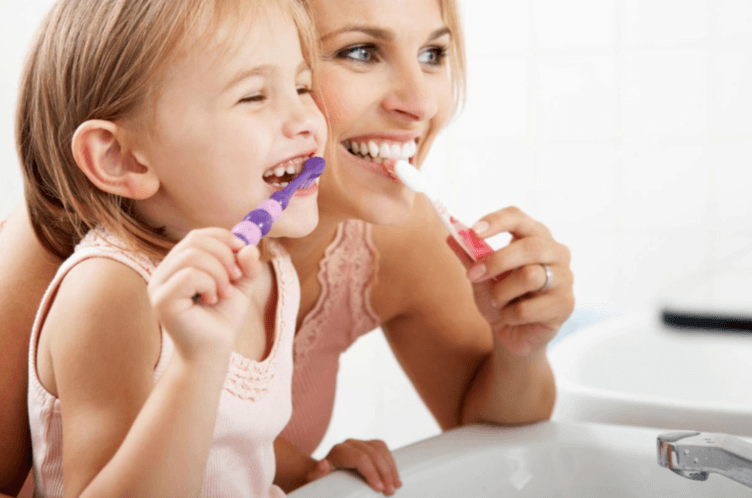
Children learn by watching. Brushing at the same time as a parent turns the routine into a shared activity and lets the child see good technique. It also gives the parent a natural moment to check the child’s work.
Parents should still finish the job
Most children do not have the dexterity to brush thoroughly on their own until around age seven or eight. A common guideline is that if a child can tie their own shoes, they may be ready to brush independently. Until then, let the child brush first and then follow up yourself, focusing on the back molars and along the gumline where plaque collects.
See also: Understanding Insurance for Life and Business
Positioning tips for little ones
For toddlers, sitting on the floor with the child’s head resting in your lap gives a clear view and better control. For older kids, standing behind them in front of the mirror lets you guide the brush while they watch.
Add flossing when teeth touch
Once two teeth sit side by side with no gap, food and plaque can get trapped where a brush cannot reach. That is the time to start flossing. Floss picks designed for children are easier to handle than string floss, and many kids enjoy doing it themselves once shown how.
Tie it to existing habits
Routines stick best when attached to something that already happens. Brushing right after breakfast and right after the bath or pajamas creates natural anchors. Keeping the order the same each night (bath, pajamas, brush, story) means brushing becomes part of the flow rather than an interruption.
Reward consistency, not perfection
Sticker charts work well for many children. A sticker for each brushing session, with a small reward after a full week, reinforces the habit. As the routine settles, the chart can fade away. Praise effort, especially when a child brushes without being asked.
Watch what happens after brushing
Brushing at night loses some value if the child drinks milk or juice afterward. Once the teeth are clean at bedtime, only water should follow. Bottles or sippy cups of milk in bed are a leading cause of early childhood cavities.
Handle resistance calmly
Some nights will be harder than others. Staying calm and consistent works better than force. Offering limited choices, such as which toothbrush or which song, gives kids a sense of control without skipping the routine. If brushing seems painful, check for a new tooth coming in, a sore spot, or sensitivity that a dentist should look at.
Regular checkups support home care
Professional cleanings and exams catch problems that home care misses, and they also give children a chance to hear about brushing from someone other than a parent. A kids dentist can also show technique, recommend fluoride levels, and point out areas the child tends to miss. Many children take advice more seriously when it comes from the dental team.
Long-term payoff
Children who brush consistently tend to have fewer cavities, fewer fillings, and more positive experiences at the dentist. Those experiences feed back into the habit. A child who has never needed a filling is often more cooperative during checkups and more confident about caring for their own teeth as they grow. A few minutes twice a day is a small investment with lasting results.